
The Best Time to Go to the Beach Is When Nobody Is There
Visiting a beach at a time when it is quiet and less crowded can transform an ordinary seaside day into a truly memorable experience. On an island like Mykonos, where beaches are a major attraction and summer crowds are common, choosing the best times to enjoy the shore — when few people are around — can reveal a more peaceful and personal connection to the sea, sand, and sky. This guide explains why quieter beach times matter, when to plan your visit, and how to make the most of these moments.
The experience of being alone or nearly alone on a beach offers space for reflection, calm, and uninterrupted enjoyment of the natural surroundings. It allows visitors to engage with their environment more fully — feeling the rhythm of the waves, observing the play of light on the water, and savoring the sense of solitude that can be rare during peak hours.
The Benefits of Choosing Quiet Beach Hours
Beaches are often busiest in the middle of the day, especially during the summer months when visitors and locals alike seek the warmth of the sun and the refreshing waters of the Aegean Sea. However, these peak hours also mean crowds, noise, and competition for prime spots close to the shoreline. By contrast, visiting a beach at early morning, late afternoon, or during less-popular times offers several benefits:
Quieter surroundings that allow for peaceful reflection
More space to spread out and relax without feeling crowded
Better opportunities for photography and scenic appreciation
A sense of connection to nature that is often lost in busier settings
Comfortable temperature and softer light during early or late hours
These advantages make quieter beach visits appealing for travelers who value calm moments, deeper sensory engagement, and a more authentic connection to the coast.
Ideal Times for a Quiet Beach Visit
The best times to go to the beach when it is less crowded depend on the season, the beach’s popularity, and daily weather patterns. Some general guidelines include:
Early Morning
Arriving at the beach shortly after sunrise is one of the most effective ways to enjoy solitude. Morning light is gentle, the air is cool, and the calm water invites peaceful swimming. Many visitors who prefer early starts appreciate the stillness and clarity that mornings provide.
Late Afternoon and Early Evening
As the sun begins its descent, light becomes warmer and softer, creating a picturesque setting. Late afternoon and early evening are prime times for beach walks, sunset watching, and relaxed swims. Crowds often thin as the day progresses, making these hours perfect for a quieter experience.
Off-Peak Season
If your schedule allows, visiting beaches outside the peak summer months will naturally result in fewer people and a more relaxed environment. Early autumn and late spring offer pleasant temperatures, mild sea conditions, and lighter crowds, all of which enhance the sense of solitude.
Choosing the Right Beach
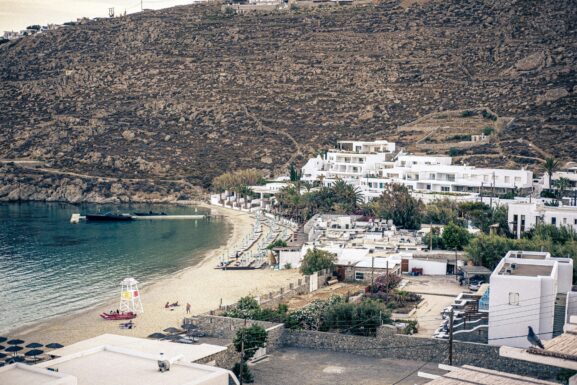
Not all beaches on Mykonos are equally busy at all times. Some of the most popular beaches — known for beach bars, water sports, and lively atmospheres — can fill quickly during peak hours. Others, particularly those that are more remote or less developed, tend to remain quieter even during busier seasons.
Beaches like Agios Sostis, Houlakia, and quieter coves along the northern coast are known for their serene settings and natural charm. Choosing these spots, especially at quieter times of day, amplifies the experience of being away from crowds. For more popular beaches, visiting early or later in the day still improves the chance of enjoying a peaceful shore.
Preparing for Your Quiet Beach Day
To take full advantage of a beach visit when it is quiet, consider planning ahead. Arrive early with essentials such as water, snacks, sunscreen, and shade if needed. Comfortable beach gear and a light blanket or towel allow you to settle in and enjoy extended time by the water. Bringing a good book, journal, or camera helps make the most of thoughtful or creative moments by the sea.
Planning for quieter times also means embracing flexibility. Beach conditions can change due to wind, tides, and weather, so adapting to shifting elements is part of the experience. By aligning your plans with natural rhythms — the sun’s path, the sea’s movement, and patterns of local activity — you can create a meaningful and restorative beach visit.
Embracing the Quiet Side of Mykonos
Choosing the best time to visit a beach when nobody is there transforms a simple coastal day into an intimate experience of place. It allows travelers to connect with the island on a deeper level, appreciating the subtle sounds of the sea, the warmth of sunlight, and the sense of space that opens up when crowds are absent.
In Mykonos, beaches are not just destinations; they are spaces for personal discovery, calm reflection, and moments that stay with you long after the sun sets. By choosing to visit during quieter times, you unlock a side of the island that many overlook — one that invites stillness, presence, and a deeper sense of connection to nature.