
Weather in Mykonos: Climate, Seasons, and What to Expect
Understanding the weather in Mykonos is an important part of planning a visit to the island. Mykonos enjoys a Mediterranean climate, characterized by hot, dry summers and mild, wetter winters. The patterns of sunlight, temperature, sea conditions, and wind shape the rhythm of life and influence everything from beach days and sightseeing to festivals and cultural experiences. Knowing what to expect in each season helps visitors prepare for comfortable weather conditions and make the most of their time on the island.
The weather in Mykonos changes gradually throughout the year, with each season offering distinct advantages and experiences. Whether you are considering a summer escape filled with sunshine and sea, or a quieter visit during the shoulder seasons, understanding Mykonos’ climate helps you choose the best time to travel based on your preferences and plans.
Summer: Hot, Sunny and Breezy
Summer in Mykonos generally runs from June to September and is the peak travel season. During this time, temperatures are warm to hot, often ranging from the mid-20s to low-30s degrees Celsius (mid-70s to 90s Fahrenheit). Sunshine is abundant, with long days and very little rainfall, making this period ideal for beach visits, water sports, and outdoor activities.
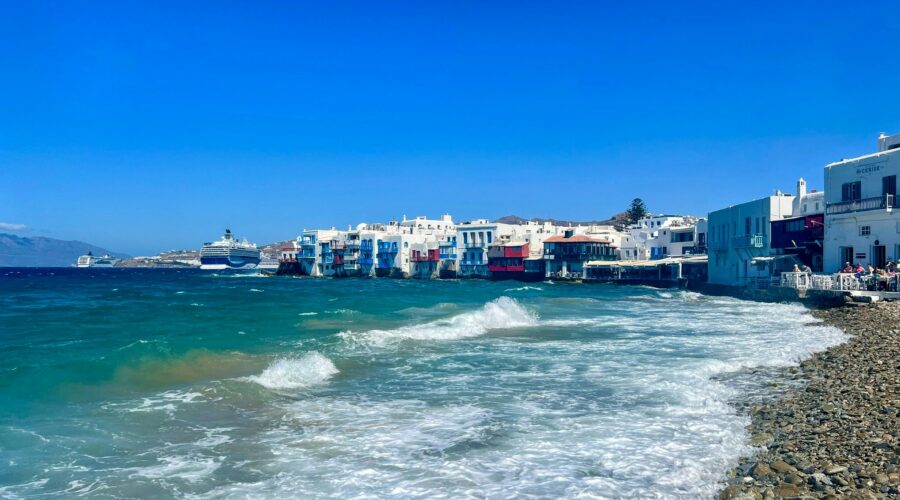
One of the most characteristic elements of Mykonos’ summer weather is the meltemi, a strong, dry northerly wind that blows across the Aegean Sea. The meltemi brings relief from high temperatures, especially in the afternoon, and creates dynamic sea conditions. While the wind adds movement to the waves, it also cools the air and provides natural ventilation that many visitors appreciate during hot summer days.
Spring and Autumn: Mild and Enjoyable
The shoulder seasons of spring (April to May) and autumn (late September to October) are among the most pleasant times to visit Mykonos. Temperatures during these months are milder, typically ranging from the high teens to mid-20s Celsius (60s to 70s Fahrenheit). Spring brings a sense of renewal with blooming wildflowers and greener landscapes, while early autumn retains warm waters and calmer weather.
These transitional seasons often have fewer crowds than summer, making them attractive for travelers who want a more relaxed atmosphere while still enjoying favorable weather. Rainfall during these months is still relatively low, though occasional showers may occur.
Winter: Mild and Quiet
Winters in Mykonos, from November through March, are mild compared to many destinations in northern Europe but can be cool and breezy. Average temperatures tend to fall between the mid-teens degrees Celsius (50s Fahrenheit), and rainfall is more frequent than in summer. Gusty winds and overcast days are common during this period.
While winter is not the most popular time for beach activities, it can be an appealing season for travelers who enjoy a quieter island experience. Businesses such as local cafés, restaurants, and cultural sites remain active, and the slower pace allows visitors to explore the island in a relaxed setting.
Wind and Sea Conditions
Wind is a defining feature of Mykonos weather, especially during the summer months. The meltemi winds typically blow from late morning into the afternoon and evening, shaping sea conditions and influencing how comfortable certain beaches feel at different times of the day. Northern and eastern beaches tend to be more exposed, with more movement in the water, while southern and western shores are often calmer and more sheltered.
Sea temperatures in summer are inviting, frequently reaching levels that are comfortable for swimming and water sports. In the shoulder seasons, the water remains pleasant, particularly in early autumn, while in winter the sea cools significantly.
Practical Tips for Travelers
Planning a trip to Mykonos with weather in mind can help you make the most of your visit. For summer travel, light, breathable clothing, sun protection, and staying hydrated are essential. The wind can make late afternoon and evening conditions feel cooler, so having a light layer on hand is helpful. In the shoulder seasons, consider packing layers to adapt to changing temperatures throughout the day.
Visitors who travel during winter should prepare for occasional rain, wind, and cooler temperatures by bringing appropriate outerwear and planning indoor activities or cultural excursions.
Weather and Activities
Different weather conditions on Mykonos support a variety of activities. Hot, sunny days are ideal for beaches, swimming, sailing, and outdoor dining. Milder days in spring and autumn are perfect for exploring historical sites, scenic drives, and hiking. Cooler periods offer opportunities to engage with local culture, visit museums, and explore the island’s towns and villages without the summer crowds.
Understanding the patterns of weather in Mykonos allows visitors to plan activities around the conditions of the day. Knowing when the meltemi winds are most likely to occur, or when temperatures are most comfortable for walking tours, can enhance the overall experience of the island.
Embracing Mykonos’ Climate
Mykonos’ climate is part of its charm. The powerful sunlight that brightens whitewashed buildings, the breezes that shape both landscape and leisure, and the gentle transitions between seasons all contribute to the island’s unique character. By paying attention to the climate and what to expect throughout the year, travelers can enjoy Mykonos in ways that align with their personal preferences and seasonal rhythms.